A long walk through the Luberon Valley, in search of the soul of Provence.
I am only slightly embarrassed to admit that the idea for a journey through Provence on foot came not from a deep investigative dive into the terrain of southern France or a moment of wild, singular inspiration, but from Elizabeth Gilbert and Peter Mayle, multiplatinum travel memoirists and patron saints of the midlife-crisis crowd. Mayle may have broke open the Provencal floodgates with his 1989 memoir “A Year in Provence,” but it was an article that Gilbert published in GQ in 2009, a few years after the Eat, Pray, Love explosion, that set the gears in motion. A friend of Gilbert’s had revealed to her that the ever-exacting French had a deep network of walking trails that crisscross in a particularly impressive way through the Luberon Valley, the same corner of Provence immortalized by Mayle two decades earlier. I’d been harboring the idea of making the trip ever since, but only under a few conditions:
1) It had to be done in the fall or the spring. The wind in the valley—so fierce that it has its own name, Le Mistral— would make a winter trek untenable, and the teeming hordes of summer would make the warmer months even worse.
2) No reservations. The villages of the Luberon are spaced out at perfect walking intervals, leaving you with challenging but entirely manageable 10 to 15 kilometer walks each day. Conceivably you could wake up one morning and head in four different directions—or nowhere at all, depending on mood and circumstance. To do a trip like this the right way, freedom from the tyranny of reservations and over-planning seemed imperative.
3) I would need someone who speaks French. My already tenuous relationship with the French* is clearly exacerbated by the fact that the only French I know involves food and obscure kitchen techniques. In most countries, I’m more than happy to butcher a few pronunciations in exchange for showing my eagerness to conform to local culture and custom; but in France, every time I open my mouth, I feel as if I may offend the entire country. Not only would a bit of French help me unlock culinary treasures reserved for locals and linguistically-gifted visitors, it might also prove vital should we find ourselves desperately lost on a trail with no one to ask but a farmer quietly working his way through his second liter of wine.
(*My trepidation concerning this great nation of people has nothing to do with the ridiculous Anglo-American-French political and cultural beefs. No, my grim sense of the French has taken shape painstakingly over years of traveling, both in their country and elsewhere, where anecdotal transgressions have stacked up like evidence in a civil suit: the hotel owners who refused to accept my apologetic English as conversational currency; the throngs of French tourists in northern Spain constitutionally incapable of mustering an hola; the sneering waitress in Paris that single-handedly ruined an otherwise excellent meal. Normally this type of petty stuff is counterbalanced by tales of redemption and human decency and one stops keeping score, but for whatever reason I don’t have any warm, fuzzy experiences with the French to buoy my general sense of pessimism about these people. Of course, every one of these acts of wrongdoing fits neatly into broad cultural stereotypes, which I am all too happy to apply as a means for a simple explanation for bad behavior. The French do the same, no doubt, as soon as I perform one of the stupid or ignorant or less-dignified acts that confirms my American-ness. It’s a savage cycle.)
This last part—finding a French-speaker to travel with—proved trickier than I expected, since a quick accounting found that I have exactly zero French friends (see above parenthetical) and know not a single soul (in Barcelona, just two hours from the French border, no less) that speaks French fluently. My girlfriend speaks Catalan, which is at least 50% closer to French than English, so that would have to be good enough.
She is also my favorite person in the world to travel with—her heart like melted butter, her eyes wide like the Mediterranean—so it was settled: we’d stumble our way through one of the Europe’s most gorgeous wine regions with no wind, no tourists, no reservations, and no French.
Day 1: Avignon to Gordes
We left Barcelona yesterday on the 4:42 pm Talgo to Montpellier, a four-hour train past Catalan vineyards and rugged stretches of the Mediterranean. After a pair of steaks, a bottle of Cotes du Rhone and a few hours of lousy sleep, we wake up early and take the one-hour commuter train to Avignon, touching down just as the city is shaking off its slumber.
Avignon is the kind of town that brings Provence’s virtues into sharp focus: the old part of town, circumscribed by an ancient city wall, is home to leafy avenues, a sprawling central market housing the building blocks for historic feasts, and the types of cafés you’d sacrifice unspeakable things to have in your neighborhood back home.
We pick up the requisites—serrated knife, wine opener, wedge of raw-milk cheese, glass jars of livery pates—and head over to an outdoor sporting store in search of the most important provision of the trip: one of the giant, hyper-detailed maps put out by the French government that captures every stone and branch of the Luberon. When the owner learns of our adventure, he launches into a 20-minute presentation involving topographical maps and stabbing hand movements, to which I shake my head with exaggerated enthusiasm and offer many spirited “ouis”. When we exit the shop, map in hand, Laura looks impressed:
“You understood that?”
“Not a word.”
But who am I to sidetrack a Frenchman’s passionate appraisal of the days in front of us for a minor concern like verbal comprehension?
Our Avignon fantasy comes to a crashing halt when we hit the bus station. It consists of a single heavily-vandalized room that smells as if it is power washed each morning with a firehose of urine. The only employee, a young girl inside the information booth, plugs the window with cardboard, which she reluctantly removes as travelers, wincing in pain from the acrid air, approach with questions, such as where is the bus to the tiny picturesque villages and why does it smell like a frat house in here? Over the next 20 minutes, this poor girl comes to hate us with a white hot intensity as we force her to remove the cardboard barricade three times in order to clarify her bitter, opaque instructions.
Finally, a bright yellow and blue bus whooshes in front of the station and rescues us from the stench and the fury.
You can’t help but ask yourself: If shit hits the fan, can I survive in the wilderness for a few days?
When the bus doors open up and eject you out onto the street, there is a certain finality to your decision to walk through France. It may be a few days before public transportation passes through these parts again. Underwear is in short supply, food is limited to carbs and triple cremes. You can’t help but ask yourself: If shit hits the fan, can I survive in the wilderness for a few days?
Fontaine-de-Vaucluse is where Petrarch put pen to paper from 1334-1341, while in exile from Florence. It’s difficult to imagine the scribe finding much inspiration there these days, unless you count throngs of tourists eating hamburgers and pizza as potential muses. But it’s hard to deny the town’s rustic charm: massive tree limbs hang over the streets like great umbrellas; a wooden water mill spins round and round; and the river, clear as a fishbowl, intensifies the green of the moss gathered on its stones like a liquid microscope. All told, it’s enough to get the blood flowing. On the way out of town, we see a golden retriever doing unprintable things to a black lab.

The path leading out of Fontaine-de-Vaucluse climbs quickly, first along a road, then up a gorge flanked with jagged stone shelves. I fold and unfold my map a dozen times trying to navigate the early twists and turns; recognizing I’m not in peak physical shape, I am committed to avoiding any superfluous movement, especially with 40 pounds on my back. When I ask a happy old French couple walking by about the direction for Gordes, their eyes open wide and the man makes a pillow with his hands and places his head upon it—the international sign for you’re screwed buddy.
But they prove the first of dozens of perfectly affable locals (yes, this trip will work to systematically destroy at least 70 percent of the prejudices I hold against the French) who know absolutely nothing of the trail system and even less about the distances between towns. Ask two people simultaneously about how far it is to the next town and one will answer 5 km and the other 15 km, then shrug at you as if to say “what’s the difference?” Only three hours and a dozen blisters.
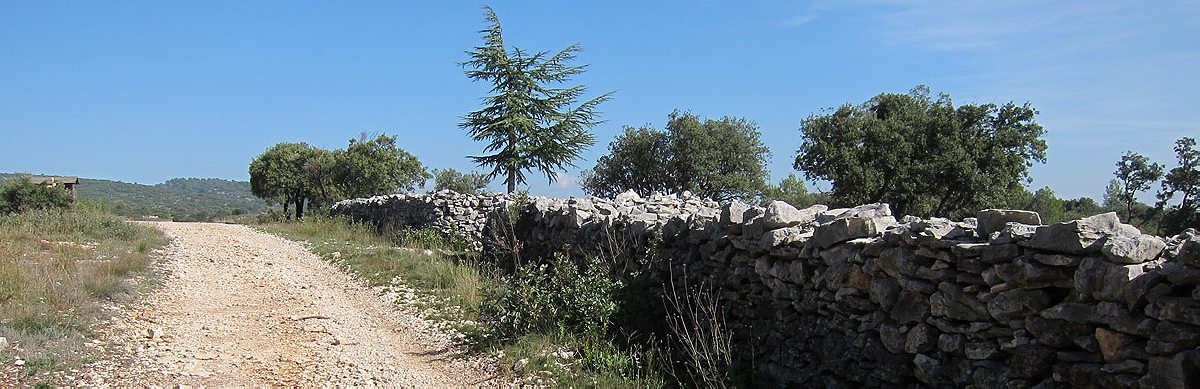
No, your best friends in this mysterious new world are the maps you procure from the local Tabacs shops (or from excitable outdoorsmen in Avignon) and the colored lines that mark the trails at every turn: red and white for the GR 6, our path for much of our time in the Luberon, red and yellow for the long-distance GRP trail, and so on. It takes a bit of getting used to, but soon you learn that an x means you’re going the wrong way, that a 90-degree angle indicates an imminent turn, and that the absence of any color at all for more than, say, 100 meters means you’ve gone rogue.
We will lose our way more than Odysseus in the days to come, but when after four hours of moderate hiking the town of Gordes reveals itself to us, the first day feels like an unqualified success.
Gordes is often anointed in guide books and tourist office pamphlets with bland monikers like the “jewel of Provence”. Indeed, the hilltop village is the very image of Provence, the first town to pop up on a Google search, right up there next to the violet lanes of lavender. It’s true that its beauty, especially in the morning when the sun climbs over the towering chateau, or in the early evening, when the staircase of stone buildings is bathed in amber and the valley behind the town looks like it was created in the mind of Matisse, can break you. You will find yourself saying stupid things like “let’s give up our crude urban existence and find an old stone home that we can covert into a little B&B.” They have a name for this in these parts: Peter Mayle Syndrome. Side effects include marmalade making, furniture building and a sudden desire to crush your own olives.
We encounter a couple stricken with this syndrome about a kilometer outside of town. Sandra (an English businesswoman) and Pierre (a French national) have transformed an old villa into the postcard ideal of B&Bs in the Luberon Valley: swimming pool overlooking pastoral landscapes, rooms the perfect shade of rustic chic, breakfast filled with enough preserves, pastries and pungent cheese to keep you on your feet all day. A side of speedy wifi to go with your pastis and olive trees? Yes, Mas Galinelle is the kind of place you want to stumble upon after four hours of walking through the woods.
At dusk, we wander into town and sit on the terrace of an upstanding hotel, drinking €12 cocktails while the sun melts over the valley of vineyards below like a wedge of Velveeta cheese.

Day 2: Gordes to Rousillon
My first dreams of Provence came as a teenager, when I stumbled across a picture of a local market in one of my mom’s glossy magazines. The village was tiny and cobblestoned, dappled with a gentle light so perfect it looked like it had been painted onto the page. Everything in that picture seemed impossibly vivid: the Technicolor tomatoes and eggplants, the farmers with dirt still crusted on their fingers, the cafe on the side of the plaza with the chalkboard menu listing untold treasures du jour.
That picture drove me wild with wanderlust. I wanted to be there to smell those tomatoes, to pepper those farmers with questions, to wander back to a small country house with nothing but a dog-eared journal and an armful of ingredients. I’ve been carrying those images around in my head for the better part of two decades, waiting for the day when I could transpose them on to reality.
All of this sounds warm and fuzzy and ripe for disappointment, but the great majority of Provencal cliches exist primarily because it is exactly that fairy-tale region you imagine it to be. To paraphrase Bourdain, it’s what Martha Stewart sees when she closes her eyes.
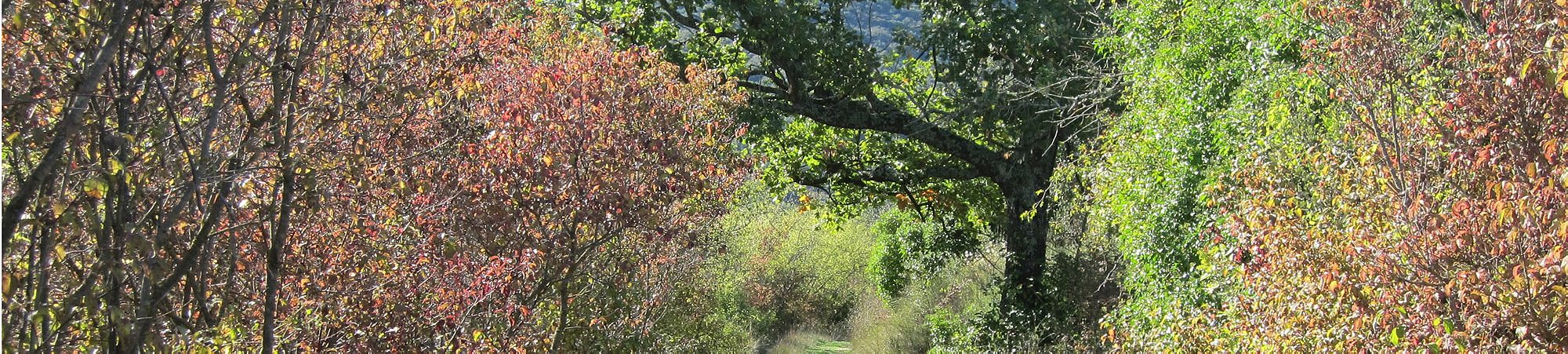
Take the first 15 minutes of our walk on the second morning: The path heading out of Gordes winds down a narrow road with sweeping views of the village, past stone houses covered in ivy, past a movie-ready 1950s Renault, and down a long corridor paved in the fallen leaves of autumn. At the base of the ravine, a moss-covered fountain dribbles from sources unknown. Looking up, the history of the town—the roots of trees, the layers of dirt and stone that hold Gordes together—reveals itself to you.
A house is for sale, one with a tiny stone table under a tangle of grapevines and a sheer face that provides the residents with an unobstructed view of the ancient majesty of Gordes. There are grapevines and cherry tomato plants and a patio with thick stone benches. We stop to fantasize about life in the house, of the legendary dinner parties we’d throw and the heroic simplicity with which we’d lead our new lives. For 20 minutes—or is it 2 hours?—the world is frozen at the base of this Provencal outpost, as if every living creature in the area is holding its breath to see if we might stay.
But we don’t—Gordes has no need for a young couple who speak no French and know very little about making jams. Instead, we heed the calls from the valley floor, where the auburn vines and plumes of smoke signal a shift in seasons—one that feels so sudden, so fragile that a stiff wind might just blow winter in this very afternoon.
The more we work this trail, the more it becomes apparent that it is not just a trail: it is a timeline, a remarkable piece of yarn stitching together the history of southern France. The sheer diversity of paths and the sets of circumstances that created them are astounding, from the Camino de Santiago, which has been delivering pilgrims more than a thousand kilometers from Provence to Galicia, Spain for 1,300 years to more prosaic trails that served as commerce routes between villages in the region.
What emerges is a tapestry of terrains to rival any trail you’ll ever walk: the soft, mineral-heavy soil of a tiny vineyard, the grip of a composite court owned by a wealthy Parisian, the mud and stone of an untamed passageway, the squishy warmth of highway pavement freshly laid. It’s an amazing testament to the organizational powers of the French government—those masters of bureaucracy—and the issues they had to navigate (owner rights, shifting demographics, a thousand years of elemental impact) to keep these trails intact.

Of course, the whole point of walking, beyond the fact that it allows you to justify the 2,000-calorie dinners you will inevitably consume each night, is that it brings you face to face with the details of life in the Luberon: the crumbling stone walls, the smell of burning leaves, the grimace of the farmer inspecting the season’s crops—breadcrumbs you’d miss in the comfort of your rental car. The trails do their best to keep you in the thickets, but it’s inevitable that your pastoral fantasies will be interrupted from time to time by the sounds and smells of modernity. Don’t fret: Soon you will be plunged back into a forest, or a meadow, or elevated to a ridge where you can take in the entire reach of the valley.
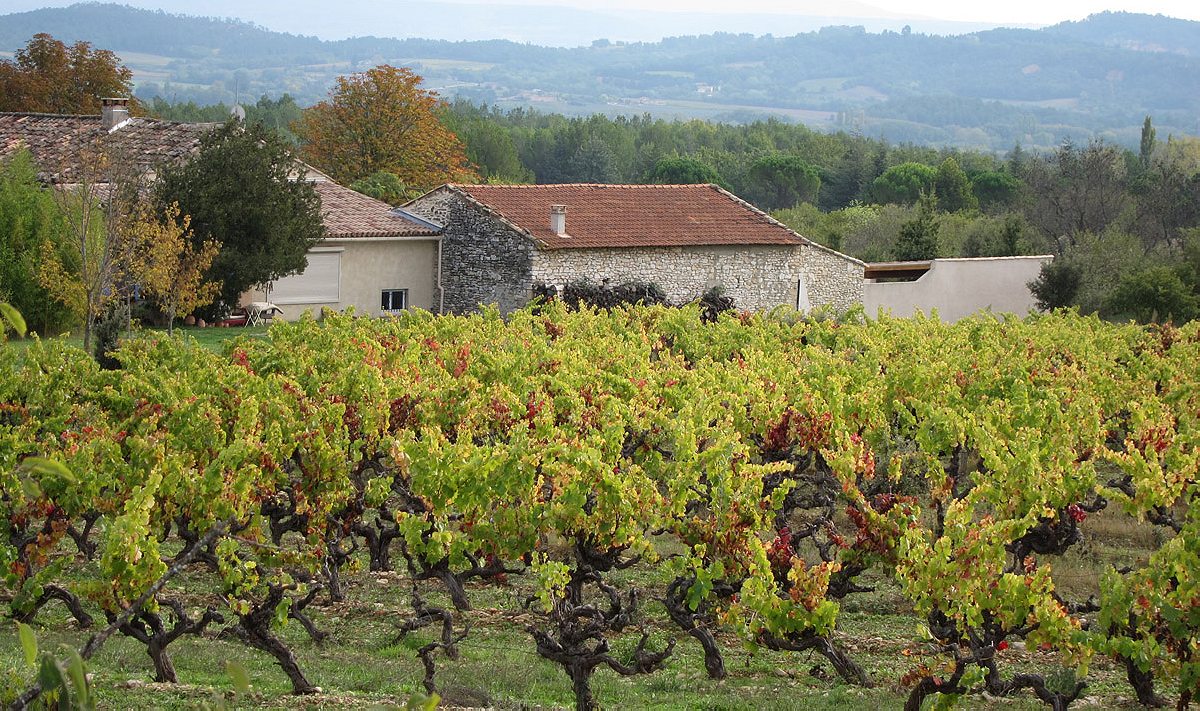
After two hours of moving from roads to highways to narrow, sheltered trails, we come upon a small vineyard. At the end of the driveway there is a hand-drawn sign directing us toward a tiny tasting room that looks to be built in the owner’s garage. Inside, a young winemaker with a fury chinstrap for a beard gives us the full spectrum of Domaine de Tara’s wine portfolio. We settled on two bottles, an effervescent bottle of sparkling rosé and a lusty, powerful red made of syrah and grenache. A few steps outside the cellar doors we decide it is pointless to try to carry so much wine up the hill to our final destination, a town that surely is in no great shortage of wine itself, and immediately lay our bags down adjacent to the withering vines and empty the bottle of bubbles into our bellies.
Maybe it’s the rosé talking, but there is something undeniably magical about approaching a town on foot. You are invariably greeted by a host of intense, deeply conflicting emotions: elation (over the fact that you won’t be sleeping under a rock tonight), exhaustion (because you haven’t exercised this much in many years), hunger (because that pack is heavy and bread and cheese and sparkling wine only go so far) and, above all, wonder (at just how beautiful and poetic it can be to watch a town towering on the horizon grow closer and closer until the road between you and it has disappeared entirely).
Today’s destination, Roussillon, makes for a particularly striking entrance, considering it is made almost entirely out of ochre and sits perched above a dramatic quarry from which a rainbow of pigments are made. It was here that Samuel Beckett went into hiding from the Germans in 1942. A longtime resident of France, Becket was working with the resistance movement during World War II when his unit was betrayed and his life was threatened. He fled to Roussillon with his lover (and later his wife) Suzanne, where he wrote, slept in haystacks, and stored armaments for his adopted compatriots. Some critics believe Waiting for Godot was a metaphor for the long walks he would take into town with Suzanne under the cover of nightfall.

We arrive to our hotel with the sun setting behind us and slip almost instantly into a deep, satisfying sleep, waking up only long enough to stumble downstairs to eat dinner.
How many small town hotel restaurants serve roasted chestnut soup with pumpkin gnocchi and seared duck breast? How often can you eat until you sweat foie gras and feel great about it? And, most importantly, if this is the reward at the end of the day, why have we yet to see a single soul on the trails of the Luberon?
Day 3: Roussillon to Bonnieux
And then, just when everything seems too postcard perfect, too roasted-chestnut delicious, the sky opens up and a great deluge nearly washes us out of the valley.
We had awoken to puddles on our balcony and a thick, brooding cloudbank gathered on the crest of the mountains. But emboldened by a three-croissant breakfast (and discouraged by the 40€—and immeasurable amount of pride—it would cost us to call in a cab from a larger town nearby to drive us to today’s destination), we blaze a quick trail out of Roussillon.
We are moving fast—past the ochre quarries, through a patch of pines, over the rocky outcrop before dropping back down into the valley, where blue streaks of sky began to peek through the gray cover above us. “So glad we decided to skip the taxi and do this ourselves,” I say to Laura with a stupid smile on my face.
And that was it, the overconfident assertion that nudges the weather gods from their slumber in order to remind us how truly tiny we are. The sky hisses and crackles like a freshly-lit fire and dumps buckets down upon us.
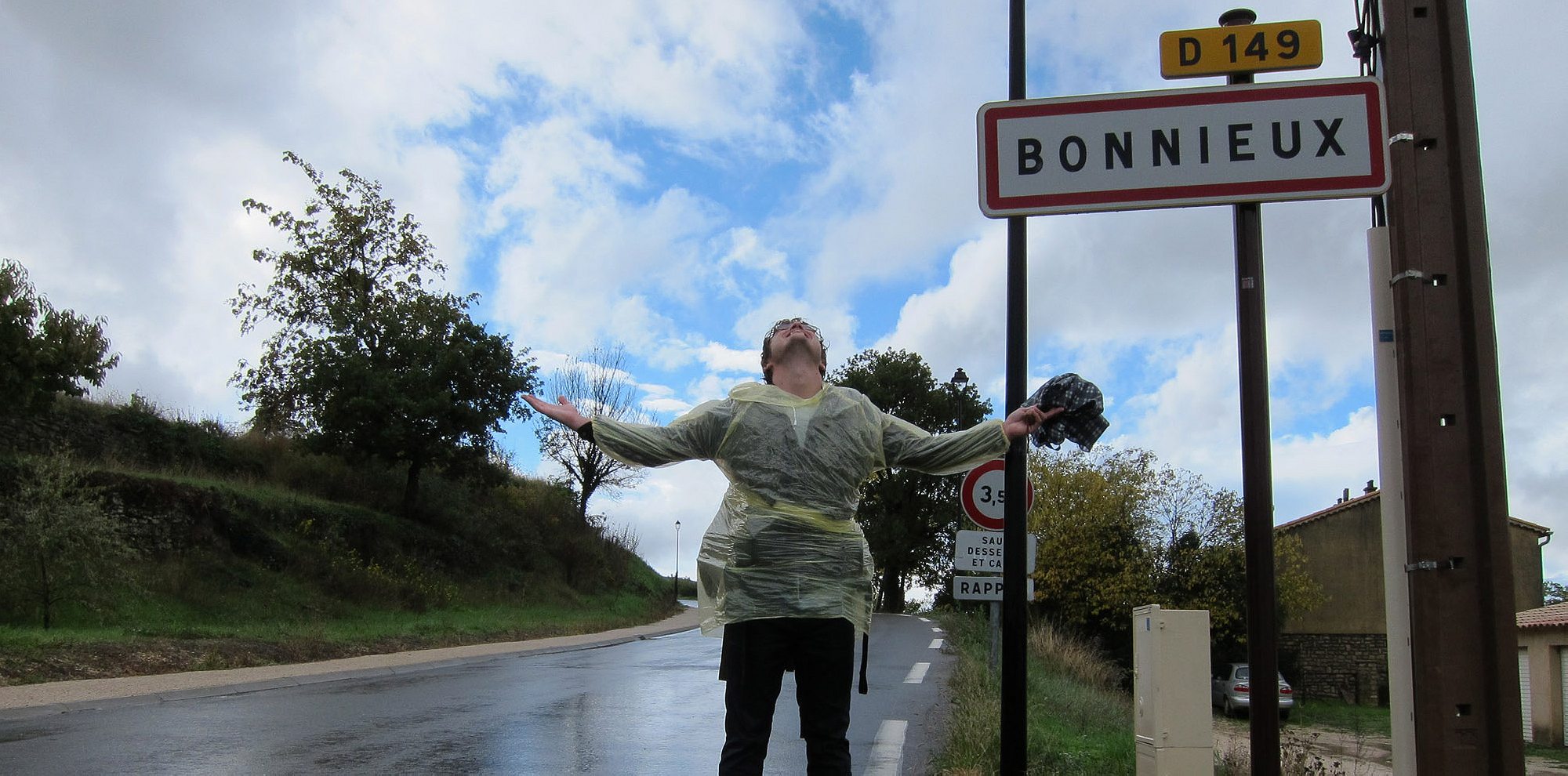
What was once so peaceful and innocent turns utterly savage in a matter of minutes. Puddles become ponds become lakes before our eyes as tree branches lash at our packs from behind. A sense of danger sets in. Fears of being stranded out here in the middle of the Luberon with nothing but a jar of tapenade and a crumbled up poncho start to gnaw away at us. As we walk we gain water weight, the rain absorbing into our backpacks and gathering in small pools on our jackets.
We lose our way more than a half a dozen times, our eyes more focused on the bodies of water forming at our feet than the tiny markings of the many intersecting trails. It goes on like this for two hours until our teeth chatter and our shoes slosh and our toes shrivel up like prunes.
Just as we spot the sign for our hotel ahead, in what can only be described as some type of cruel cosmic joke, the clouds that once seemed impenetrable open up to reveal a brilliant sun and a fiercely blue sky. The owner welcomes us with towels.
We have come to Bonnieux not because it is a drop-dead gorgeous village (and it is, with its tiny cafes and cheese shops, its imposing church, its stunning 270˚ view of the Luberon), but because it houses the most sacred destination of our particular pilgrimage: the best restaurant in the region.
The great restaurants of the world are found primarily in urban areas, where concentrations of culture and cash keep well-oiled establishments churning out $200 dinners to packed houses night after night. But in France, a town of 1,000 people is as likely to be home to a world-class restaurant as a chic district in Paris.
To get to Edouard Loubet, you wind your way through the streets of Bonnieux, where ancient cobblestones rise to the stature of small mountains, past tiny cars parked on tiny streets, around a ridge overlooking the valley—the Chateau de Lacoste, where the Marquis de Sade used to play doctor with his dinner guests, casting a gentle glow in the distance—then finally up to a large iron gate, which opens magically just as you wonder how you’ll ever get in.
Edouard Loubet, located in the regal Bastide de Capelongue hotel, currently holds two Michelin stars, but whispers around Luberon dinner parties have it that Loubet is on the brink of a third star, which would make this one of the most sought-after tables in all of southern France. As we enter the restaurant, the entire staff is lined up to welcome us: we are the first of the day to arrive.
The maitre d’—tiny and sweet and deeply dedicated to the comfort of her guests—sees that we’re cold and leads us back to a room with a roaring fire and sits us down on a plush sofa. She returns with a bottle of rosé champagne roughly half her size, followed by trays of food in miniature: shot glasses of mushroom flan, duck confit lollipops, a palm-size pizza showered with the season’s first white truffles. Fire, bubbles, bites: It is the finest welcome I’ve ever had at a restaurant.

“Can we just stay here?” Laura whispers into my ear as the same sweet woman arrives to escort us back to the dining room.
If there was ever any doubt that French fine dining is different than fine dining elsewhere in the world, the proof is right there on the menus: mine has prices, hers does not (you know, because in 2012, no woman in France ever pays for her own meal). We opt for the lighter of the two tasting menus, then proceed to get clobbered with the totems of French gastronomy: escargots, bathed in an emerald bath of butter, white wine vinegar and lavender; a thick wedge of porcini mushroom, blanketed in puff pastry, served alongside a rich and dense mushroom puree; sea bass, pan-roasted hard on one side until the skin is potato-chip crisp, then set afloat atop a foamy fish fumet; rare beef and raw oyster—a slippery surf and turf bound together with a cloak of demi glace.
The French appear to be the only ones left on the planet who insist on using butter in every dish—more often than not, to dazzling effect. But that’s because they know how to wield the heavy weaponry, how to cut foie with a few drops of vinegar, how to highlight snails with a pinch of gently bruised herbs, how to reign in a slow-cooked piece of lamb with a dusting of dried orange zest. Rarely light, but always enlightened. It’s a reminder that while the gastro-bots of the world may be more interested in fawning over Spanish modernism or Nordic naturalism, the French are still the ones who invented fine dining, and in many ways, they still set the table.
When the cheese cart comes, we are so stuffed full of fungus and tubers and melted butter that it hurts just to look. Too bad, since it is, without a doubt, the finest collection of raw-milk cheeses I’ve ever seen. After we decline the cheese, when the server spends 25 minutes preparing two plates for the table next to us, caressing the wedges as if she personally knew the goats and cows and sheep that went into them, I slide down into my seat and sulk just a little bit.
After coffee and petit fours by the fire, we pull ourselves together and prepare for the long walk down the hill to our hotel. Only it’s raining again, hard. As we open the door and ready our umbrella, a station wagon pulls around and a door opens up. The man who beckons us in is none other than Edouard Loubet himself, still in his chef’s whites, ready to whisk us back down to Bonnieux.
On the way, he tells us a bit about his life: that he was born in the mountains around Val-Thorens, that he learned to cook from his grandparents, that he’s run restaurants in the States and Canada and all over France, but the Luberon is home. He says he likes the Provencal air, the climate, the treasure trove of still life-quality ingredients that local farmers deliver to his door each day.
We nod our heads furiously, tell him that we’ve fallen madly in love with this little valley of his, that we adore the people even though we can barely communicate with them, that even though we’ve only been here a few days, the connection already runs deep and that the only minor setback has been a bit of rain as we walked from Rousillon to Bonnieux but even that wasn’t such a big deal knowing that a warm hotel and a night full of champagne and truffles waited for us on the other end.
He pauses. “Wait, you walked?”
(SOMEWHAT) PRACTICAL INFORMATION
Food
Pick up energy-dense supplies (nuts, cheese, duck liver pate) at the Les Halles market in Avignon (open every day, except Monday, from 6:00 am to 1:30 p.m.). Restock as often as possible in the towns, preferably at the daily markets that rotate from one village to the next throughout the week (one of the great miscues of our trip was the fact that we were always one day behind the roving Provencal markets, justifiably famous for their abundance of gorgeous produce, cheeses and charcuterie). Follow the market schedule here.
Breakfast comes with the lodging and lunch should always, always be a picnic on some sunny patch of grass or on a bench at a winery. (Look for property signs before setting up a picnic—just because that land looks abandoned doesn’t mean it is. There are no hard-and-fast picnic rules—just use your best judgment.) That means the only meal you’ll need to really think about each day is dinner. But if you go in the off season, you won’t have to think too hard, as most of these towns are small and have only one or two restaurants serving dinner. Dinner hours in the Luberon are typically 6-9 pm, perhaps a touch later in the summer.
Marianna
Depending on the night you go to this cozy, candle-lit restaurant, Marianna will likely be your hostess, server, sommelier and cook. The food is more Italian than French, but after a long day of walking, a plate of caponata and a bowl of pasta isn’t a bad way to go. Three course menu costs 30€. Rue de la Tour Sarrazine, Gordes +33 4 32 50 21 74
Restaurant David
Located inside the Le Clos de la Glycine hotel (see details below), most consider this Roussillon’s best restaurant. A three-course meal filled with modern updates on Provencal classics (roasted onion stuffed with foie and mushrooms, sea bass with pumpkin cream) costs 41€.
Edouard Loubet
A full-throttle French fine-dining experience. Expect luxury ingredients (foie, truffles, wild mushrooms) handled with extreme finesse and delivered by an extremely polished staff. Set menus start at 58€. Located inside the Domaine de Capelongue hotel. Les Claparedes, Chemin des Cabanes, Bonnieux, +33 4 90 75 98 78
Lodging
Bed and breakfasts are generally positioned just outside the villages of the Luberon, but most are close enough that you can walk to and from town for meals, supplies and general exploration. The alternative, staying at hotels or pensions in town, is just fine, but you’ll pay more for less space and considerably less rustic charm.
Though we swore off reservations for our trip, if you go anytime between April and September, it’s probably a good idea to make them.
Mas Galinelle
The Platonic ideal of a Provencal B&B, complete with pool, olive trees, amiable owners, and a massive, friendly dog named Toby. Breakfast here will be the greatest hour of your day. About €120 a night. masgalinelle.com, +33 4 32 50 23 49
Le Clos de la Glycine
The rooms are nice (if a little pricey), the location is perfect, and the restaurant downstairs is the best in town. Ask for a room with a terrace, the ideal place to consume any wine you’ve picked up on the trail. From 110€ per night in the low season.
Place de la Poste, Roussillon, +33 4 90 05 60 13
Le Clos du Buis
Run by a friendly French couple who do their best to make a stay at this hotel feel like a few nights with close friends. Excellent views, a pool and a hearty breakfast all included. Rooms start at 92€. Rue Victor Hugo, Bonnieux, + 33 4 90 75 88 48
Transportation
No better transportation in the Luberon Valley than your own two feet. As far as getting there and back, a handful of bus lines depart from Avignon and will drop you off and pick you up in the bigger towns of the region (Fontaine de Vaucluse, because of its position on the western side of the Luberon, makes for a good strategic trailhead). Make sure you download the most recent schedules, as they are subject to frequent change.